
Do you share your home with a furry pet? Then, according to scientists, your body is full of animal microbes. Is there anything to worry about?

Too much cleanliness... is it harmful?
There's certainly nothing new about the theory that the "dirtier" we are, the more resistant and able our bodies are to fight off viruses and bacteria. In 1989, scientist David P. Strachan even formulated the so-called hygiene hypothesis - and according to it, the development of allergies as well as various autoimmune diseases is simply due to insufficient stimulation of the immune system in childhood. In short, too much cleanliness and too few external stimuli lead to the body's subsequent inability to defend itself when necessary. Although various controversies have subsequently arisen in relation to this hypothesis, in 2003 experts clarified it only slightly: according to them, our immune system can develop a close relationship with certain types of microbes - and if these microbes are missing in the body, this results in a failure of the entire immune system. How do our pets relate to all this?
Let's change the microbes!
You may not even realize it, but you and your dog/cat are like "microbe dealers" for each other, which means that your microbes enter your dog/cat's system (called the microbiome) and vice versa. Don't you know what a microbiome is? It is actually a huge ecosystem involving countless microorganisms, all inside our bodies. The human microbiome is estimated to include something between ten and one hundred trillion microorganisms - and the same is true for dogs and cats. In fact, their bodies too, inside and out, are literally teeming with different microbes that contribute to their overall health and well-being.
And since the microbiome is the very foundation of health, scientists say it is very interesting how positively human and animal microbiomes can interact. In fact, the connection between humans and pets is much closer and more intense than anyone might suspect - and it's definitely not just about mutual love, but just about passing on each other's microbes. Have you shaken off the disgust? Then rest assured that it's your close relationship with your dog or cat that actually makes you healthier. And, according to recent research, this "bonding" may also make you more resistant to digestive problems...


Goodbye, extreme hygiene
Scientists have been interested in the exchange of microbes between humans and their pets since the 1980s - and have discovered, among other things, that humans and animals change their gut bacteria when they live together. It has already been proven, for example, that if a person is in contact with hop-keeping animals or pets in early childhood, they can protect themselves against asthma, allergic diseases and metabolic diseases that occur in childhood. This is due to the expansion of the diversity of the gut microbiome. Are you now wondering exactly how you swap microbes with animals?
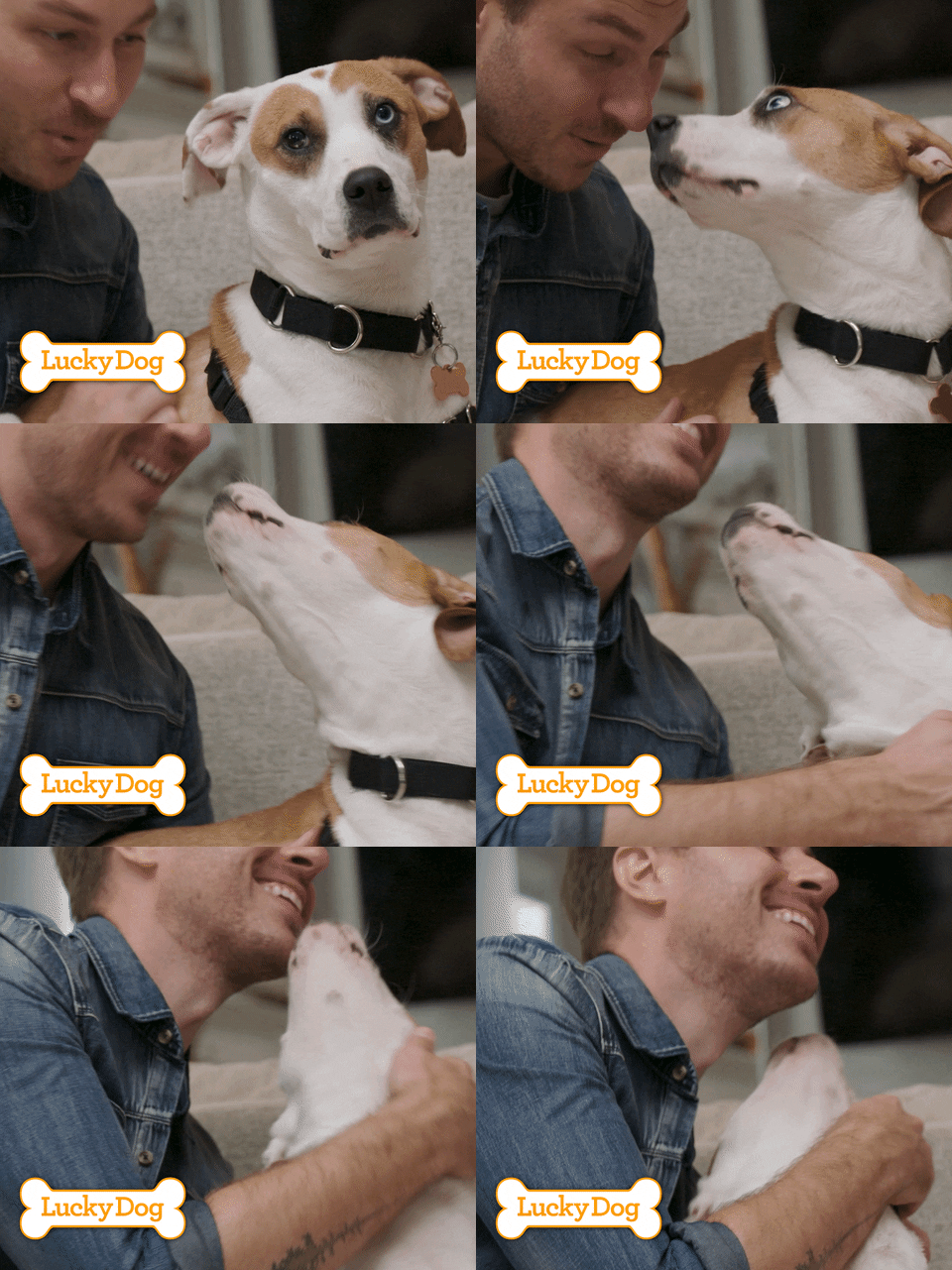
It's quite simple. "Transmission occurs through close but also indirect contact. You may snuggle with your dog, your cat may sleep in bed with you... or these animals bring in certain microbes from the outside. Saliva is also a source of microbes - so they can be transferred to you when your pet licks you, but maybe also through contact with his toys that he takes into his mouth," explains Meghan Davis, an expert at the Johns Hopkins Bloomberg School of Public Health. And saliva is definitely not the "worst" thing yet. In fact, a very common mode of transmission is also... poop. "There is a fecal patina covering the entire world. It's a way for people to transmit microbes to their animals, and for animals to transmit microbes to 'their people,'" adds epidemiologist Shira Doron.
 Zdroj: Giphy
The result of all this (at first sight not very appealing) transmission is then the creation of matches in the microbiomes of humans and animals. For example, research in 2013 showed that the skin microbiome of adults closely resembles that of their dogs. And also that couples who own a dog share more microbes with each other than couples who don't have a dog. But it's also quite surprising that dog owners (of any kind) have more microbes in common compared to people who don't share a household with a dog...
Microbes as prevention
While research into the benefits of exchanging microbes with pets is far from fully covered, at least one major finding has already been made by experts: animal microbes can very effectively protect us humans from intestinal infections caused by clostridium difficile. Clostridium difficile infection is the scourge of everyone who finds themselves in hospital, because that is where it spreads the most. Although researchers initially thought that animals might be the source of the recurring infection, they eventually found the opposite. "We found that people who had more contact with their pets - sleeping with them, allowing them to lick their face, etc. - were better protected against this bacterium," the 2020 research report then summarises.
But in addition to the effect of microbial exchange on immunity, the researchers have already found, for example, that if a dog takes probiotics, the owner's gut microbiome subsequently improves. And there is also reportedly a possible link between the weight of the dog and the owner - this aspect is also linked to the health of the gut microbiome. So, as Meghan Davis summarises, "we still have a long way to go in understanding microbial exchange between humans and their pets. But we already know that the human-animal bond can be a very positive and beneficial relationship."


