
Shower on Sunday, clean linen once every three days. People all over the world are "ditching" hygiene because of the pandemic, it's good for them and the planet

Lockdown dirtbags
It was already clear that something major was happening to our hygiene habits during the first lockdown last spring. In the US, for example, Advanced Dermatology conducted a survey of more than 1,500 people to find out how working from home had affected their daily hygiene habits. It was already clear that those who spend all their time at home, between four walls, tend to neglect their personal hygiene and cosmetic routines quite substantially. One in five respondents admitted to brushing their teeth less often than usual, and one in three said they showered less often and changed their underwear (hand in hand with this, the intensity of washing also decreased). This is how people's behaviour has changed in just two to three months of being at home. Today, however, many have been at home for more than a year. And proportionally, our indifference to how we look, and perhaps even how we smell (well, there's not much to talk about smell...) has increased.
In fact, a survey conducted back in 2021, across the US and the UK, showed that even more has changed since spring. Almost 60% of people have stopped paying attention to their hair (e.g. 7 out of 10 women have stopped dying their hair and one in four men have started cutting their own hair), over 40% of those stuck in a 'home office' don't change out of their pyjamas in the morning (and 33% don't put on clean underwear every day) and 36% of those who work from home have stopped using deodorant and perfume. Similarly, the interest in shaving beards and body hair has fallen (again over 30%). In essence, it could be said that homes turned into impromptu offices are now inhabited by unkempt, unkempt and not very fragrant people who - except for video conferencing - do not change out of what they normally sleep in. And although no similar study to the ones mentioned above has yet been done in the Czech Republic, it certainly doesn't mean that Czechs are any kind of washed-out and smelly exception.


"When I went to work every day, I also changed my shirt, socks, underwear every day. In fact, it seemed completely automatic to me. Now there's no point, I only put my shirt on when my colleagues and I have a meeting, I usually change two. It's not that I wash them, but I don't wear the same one all the time. Socks at home last a few days, I found that out pretty much right away. And actually the underwear too," says IT worker Honza. He also adds that when his hair got too "big", he simply "shaved it off with a razor". And he doesn't overdo it with the shower either. "I just sit all the time, on a chair, on a sofa, so I don't feel like I'm sweating. I think a shower once every two to three days is fine. I use deodorant at home sometimes, so I just wash it off at the sink in the evening," he says.
"If I don't have a personal meeting, which is really quite a few, I shower more sporadically. Normally, I just wash my face in the morning and then I wash myself more regularly down there," says Tomas with a laugh, who like countless others is also stuck "at home alone". He also admits that from a certain point on, he actually feels much better.
 Zdroj: Giphy
Necessity vs. habit and expectation
So it seems as if working from home and limiting opportunities for social contact has opened up a much wider question - that is, whether our pre-pandemic habits of hygiene, but also self-care, were really so necessary. Indeed, as current practice shows, many people can do quite well without many activities and, in fact, specific products. Not to mention the fact that it shows what some experts, not only in the field of dermatology, have already pointed out in the past - that people are overdoing it when it comes to using various cosmetic products. While many women, for example, have found that cutting back on make-up makes their skin healthier, as does cutting back on daily washing, blow-drying and hairspraying, people all over the world have realised that they can do without deodorants. And yet, in the midst of a pandemic, sales of deodorants have taken quite a hit, with more than a third of society cutting back on their use. The most significant drop in interest (by more than 40%) in these products was among younger people, who are also the most inclined towards more environmentally friendly lifestyles and therefore more sustainable body care.
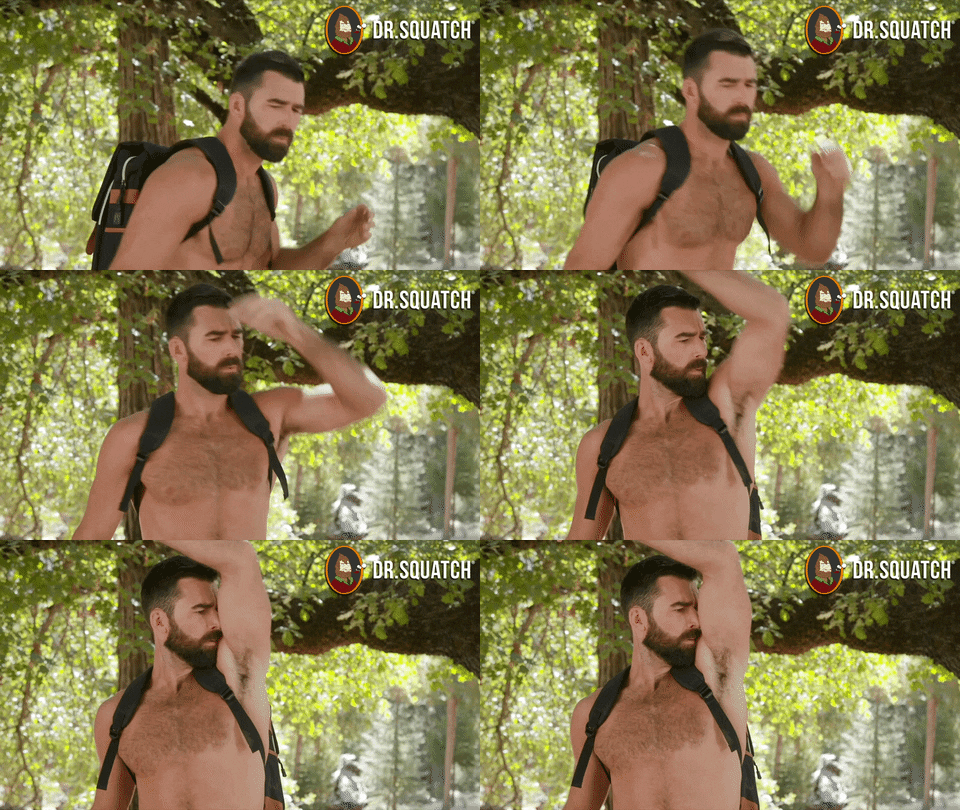 Zdroj: Giphy
A return to a healthier approach to cleanliness?
Now, it may seem to some that everyone has gone terribly wet at home. And the truth really is that the pandemic has changed many of our routines - including our hygiene routines. Of course, lest it seem like everyone in the home office is just sitting at home in their pajamas, unwashed and uncombed, some habits have also been added. Those who are able to adjust their working hours to suit their own needs have, for example, started jogging (and then showering) at lunchtime, while others have increased their dental care due to concerns about visiting the dentist's office.
But it turns out that some reduction in beautification activities actually does not harm people. Not to mention that changes in hygiene habits have a positive impact not only on water and energy consumption, but also on the environment in general (which is especially the case when it comes to reducing the use of various cosmetic products). And so perhaps this will be one of the important lessons we take away from the pandemic - that pre-pandemic hygiene was too extreme. For as James Hamblin, a physician and author of Clean: The New Science of Skin and the Beauty of Doing Less, explains, washing the human body has historically been more of a ritual than an act of cleanliness. Standards of cleanliness have only risen to their extreme in recent decades with the rise of the cosmetics industry. "There's a huge industry based on the idea that washing is good for people - and the more of it, the better. But it's the same with washing as with anything else - too much of everything is bad for you," Hamblin sums up. And so let's remember this experience - in a time of a return to the much-vaunted normal (although this will undoubtedly not involve doing the job in one universal shirt and pyjama pants), it could come in handy, at least on a basic level.


